+86 182 3185 8969
+86 182 3185 8969

Finding a stainless steel window screen manufacturer is easy. Finding one that can repeatedly deliver the correct material, mesh count, wire diameter, roll size and packaging across large orders is much harder.
For importers, distributors, window and door manufacturers, contractors and private-label buyers, a low quotation is only one part of the decision. An unsuitable supplier can create losses through material substitution, inconsistent openings, damaged rolls, delayed shipments and customer claims.
This guide explains how to evaluate a manufacturer before placing a trial order, annual contract or container-scale purchase.
Do not request a quotation for only “stainless steel window screen.” That description leaves too many variables open.
Your RFQ should state:
· Stainless steel grade, such as 304, 304L, 316 or 316L
· Mesh count in both directions
· Wire diameter and required opening
· Roll width and roll length
· Natural, black-coated or custom finish
· Edge condition
· Order quantity
· Packaging and labeling
· Inspection and document requirements
· Destination port and required delivery date
· Intended application and installation environment
Mesh count, wire diameter and opening must be considered together. A supplier can keep the same nominal mesh count while using thinner wire, producing a lighter product with different strength and value. ASTM E2016 covers industrial woven wire cloth specified by mesh count or opening, showing why buyers should define the construction rather than rely on a general product name.
Trading companies can provide useful services, but buyers should know who controls weaving, coating, slitting, inspection and packing.
Ask for:
· Factory address and registration details
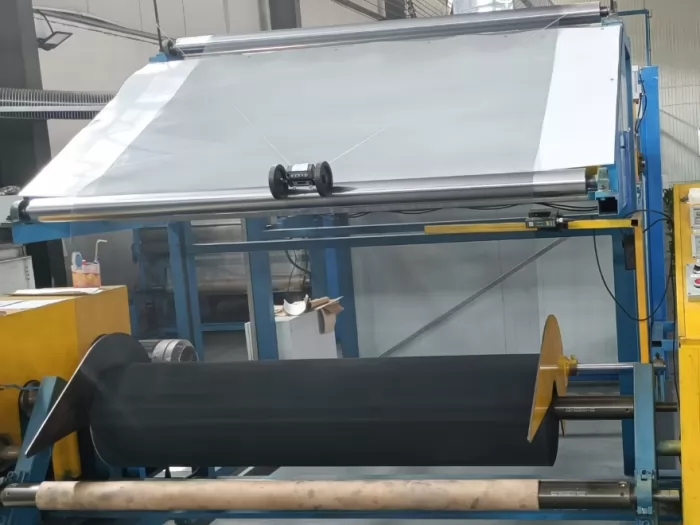
· Live production video or factory audit
· Number and working width of weaving machines
· In-house and outsourced processes
· Monthly capacity for the requested specification
· Raw-wire sourcing information
· Inspection records
· Packing and container-loading facilities
During an audit, follow the process from raw-wire storage to weaving, inspection and finished-goods packing. The goal is not simply to prove that machines exist. It is to determine whether the supplier controls the processes that affect your product.
A screen labeled “304” or “316” cannot be verified by appearance alone.
Request:
· Raw-material certificates
· Chemical composition reports
· Batch or heat records where available
· Incoming-material inspection records
· Finished-roll batch identification
· Positive Material Identification for important projects
ASTM A555/A555M establishes general requirements for stainless steel wire and wire rod, making raw-material documentation relevant to procurement control.
For 316 orders, XRF testing can help confirm the presence of molybdenum. The purchase agreement should define the sampling method and action required if a batch fails.
Do not rely only on a magnet test. Wire drawing can affect magnetic response, so magnetism alone does not reliably identify 304 or 316.
A quality certificate does not prove that every roll meets your purchase order. Ask how the manufacturer checks:
· Wire diameter
· Mesh count and opening
· Roll width and length
· Surface condition
· Weaving defects
· Flatness and winding tension
· Coating color and adhesion
· Roll weight
· Packaging and labeling
Confirm which measuring tools are used, how often inspections occur and whether records are linked to production batches.
ISO 9001 can indicate a formal quality-management system, but it should support rather than replace product inspection. ISO defines quality-management-system requirements, while NIST supplier-evaluation procedures emphasize confirming that purchased products and services meet defined requirements.
A small cutting can confirm color and mesh appearance, but it may not reveal problems with roll width, tension, winding or packaging.
Where practical, request a full-width trial roll and check:
· Material grade
· Wire diameter and opening
· Cutting performance
· Frame compatibility
· Visibility and airflow
· Surface finish
· Roll flatness
· Fabrication waste
· Packaging method
Record the approved sample number, date and specification. The purchase order should state that mass production must match the approved sample and written tolerances.
Also confirm that the sample came from normal production rather than being specially prepared.
A factory’s total capacity is less useful than its available capacity for your exact specification.
Ask:
· What is the monthly output for this mesh?
· Is the required roll width standard or custom?
· Is coating completed in-house?
· How long does raw-wire purchasing take?
· What is the production time after sample approval?
· How is capacity reserved for repeat orders?
· What happens if a machine stops?
Request a schedule covering material preparation, weaving, coating, inspection, packing and shipment. A supplier promising an unusually short lead time without checking material or machine availability may be giving a sales answer rather than a production plan.
Common customization options include:
· 304 or 316 stainless steel
· Alternative mesh counts and wire diameters
· Custom roll widths and lengths
· Natural or black-coated surfaces
· Buyer-designed labels and cartons
· Palletized or non-palletized packing
· Mixed specifications in one container
For every custom feature, confirm MOQ, tolerance, setup cost, sample time and repeat-order consistency.
Custom width requires special attention. A wide weaving machine does not automatically guarantee accurate finished width. Ask how edges are controlled and how width variation is measured.
Window-screen rolls can be damaged by moisture, compression and poor loading.
Confirm:
· Inner wrapping and waterproof protection
· End protection
· Carton strength
· Rolls per carton or pallet
· Maximum stack height
· Pallet and fumigation requirements
· Label position
· Container-loading method
Request packing photos and dimensions before approval. Packaging affects freight cost, warehouse handling and the condition in which customers receive the goods.
For private-label orders, approve carton artwork, roll labels and barcodes before printing.
Two rolls with the same width and length may contain different amounts of stainless steel because of wire diameter, mesh count and actual length.
Compare quotations using:
· Verified specification
· Price per square meter
· Roll weight
· Material grade and tolerance
· Defect allowance
· Packaging cost
· Testing cost
· Lead time
· Payment terms
· Claim policy
Ask all shortlisted suppliers to quote the same RFQ revision. If one price is significantly lower, identify which technical or commercial condition changed.
Observe whether the supplier:
· Answers technical questions clearly
· Confirms revisions in writing
· Identifies missing information
· Provides realistic delivery updates
· Sends inspection records
· Explains corrective-action procedures
· Assigns responsibility for claims
Ask how short rolls, mixed grades, damaged packaging or out-of-tolerance mesh will be handled. A useful claim policy should define evidence requirements, response time and available remedies.
Before approving a supplier, confirm that:
1. Key production processes are controlled.
2. The specification is complete and measurable.
3. Stainless steel grades are traceable.
4. Inspection methods and tolerances are documented.
5. A representative trial roll is approved.
6. Capacity is available for the required quantity.
7. Custom features have clear MOQ and setup terms.
8. Export packaging has been reviewed.
9. Lead time is supported by a production schedule.
10. Claims are handled through a defined process.
Be cautious when a supplier:
· Quotes without asking for wire diameter or mesh count
· Refuses to provide material records
· Cannot show current production
· Avoids stating tolerances
· Provides a sample without batch identification
· Promises delivery before checking capacity
· Changes specifications only through informal messages
· Offers a much lower price without explaining why
One warning sign may have an innocent explanation. Several together indicate a higher procurement risk.
The best stainless steel window screen manufacturer is not necessarily the largest factory or the supplier with the lowest price. It is the manufacturer that can convert your application into a controlled specification, verify the raw material, reproduce the approved sample and deliver consistent rolls on schedule.
For a first order, prepare a complete RFQ, audit the key processes, approve a representative trial roll and arrange pre-shipment inspection. After quality and delivery are verified, repeat or container orders can be planned with lower risk.
For wholesale, OEM and project purchases, Jiushen provides configurable stainless steel window screen solutions in multiple grades, mesh counts, wire diameters, roll sizes and packaging formats—send your required specification, quantity and destination to receive a production-based quotation. Contact us right now!
Copyright © Hebei Jiushen Wire Weaving Co., Ltd. All Rights Reserved. |
Sitemap
| Technical Support: