+86 182 3185 8969
+86 182 3185 8969

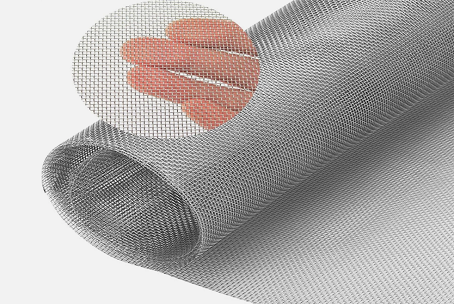
Material waste in filter manufacturing does not always come from defective filter media or rejected finished elements. In many production lines, a considerable amount of waste is created before pleating begins because the width of the epoxy coated wire mesh does not match the required filter strip width.
Filter manufacturers often purchase standard-width rolls because they are easy to source. However, a standard roll may leave unusable side strips after slitting, require additional trimming or force the production team to change the filter design around the available material.
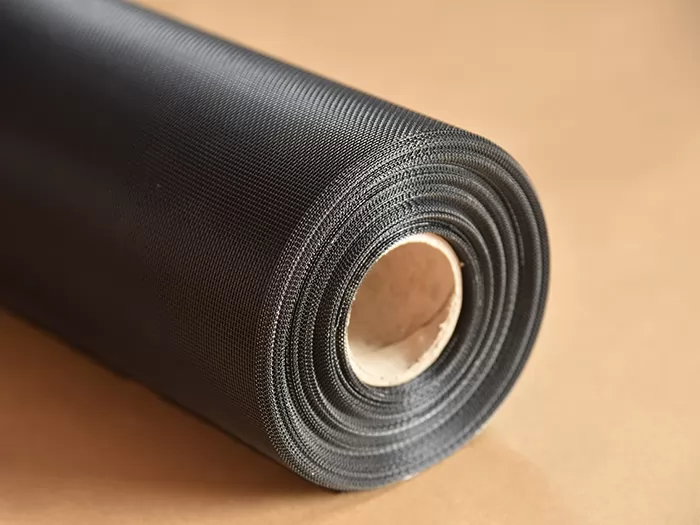
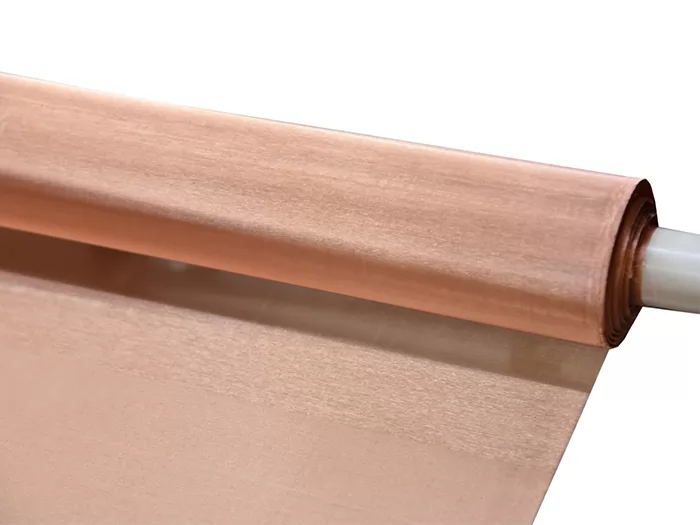
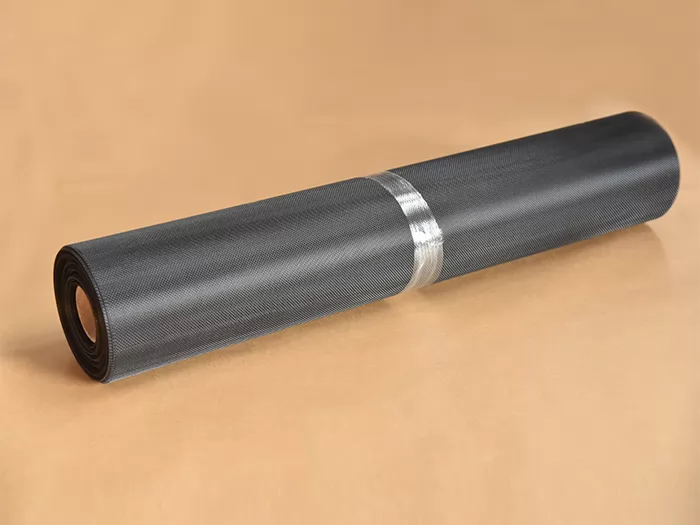
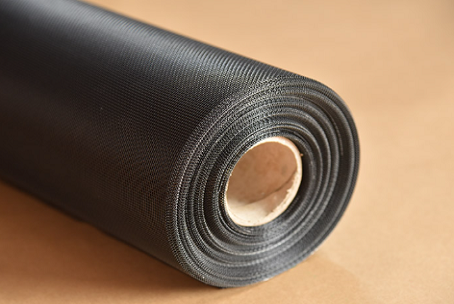
Custom roll widths allow the epoxy coated wire mesh to be supplied closer to the actual dimensions required by the slitting, pleating and filter assembly processes. When properly calculated, this can reduce scrap, improve roll utilization and simplify production planning.
Epoxy coated wire mesh is commonly used as a supporting or protective layer for filter paper, glass fiber media and synthetic filter materials. It may be pleated together with the filter media or added as an inner or outer supporting layer.
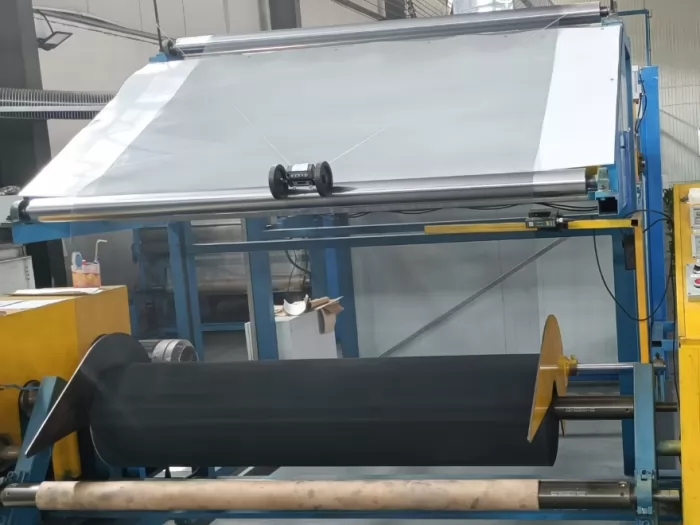
Before entering the pleating machine, a wide roll of epoxy coated wire mesh is frequently slit into narrower strips. Each strip must match the required width of the filter media and the dimensions of the finished filter element.
When the master roll width is not compatible with the required strip width, the remaining material becomes edge waste.
For example, a filter manufacturer may require strips measuring 300 mm wide. If the company purchases a 1,000 mm-wide roll, it can cut three 300 mm strips, using 900 mm of the material. The remaining 100 mm represents approximately 10% of the total width.
Unless the 100 mm strip can be used for another product, it becomes scrap.
With a custom epoxy coated wire mesh roll width close to 900 mm, plus the necessary trimming and slitting allowance, the same manufacturer can produce three usable strips with significantly less side waste.
A simple width utilization calculation can help buyers compare standard and custom roll sizes.
Width utilization rate = Total usable strip width ÷ Master roll width × 100%
Using the previous simplified example:
· Master roll width: 1,000 mm
· Required strip width: 300 mm
· Number of usable strips: 3
· Total usable width: 900 mm
· Width utilization rate: 90%
· Theoretical side waste: 10%
This calculation should not be used without considering production allowances. Actual roll planning must also include:
· Edge trimming allowance
· Slitting blade clearance
· Width tolerance
· Damaged or uneven edge removal
· Required spacing between strips
· Possible material movement during unwinding
If each strip must be delivered at exactly 300 mm, the master roll should normally be slightly wider than 900 mm so that the edges can be trimmed and the finished strips remain within tolerance.
The correct custom width is therefore not always an exact multiple of the finished strip width. It should be calculated according to the real slitting process.
| Consideration | Standard Roll Width | Custom Roll Width |
| Initial availability | Often readily available | May require production planning |
| Material utilization | Depends on strip dimensions | Designed around required strips |
| Side waste | Can be high | Usually lower |
| Slitting requirements | May require additional cuts | Can simplify slitting |
| Inventory flexibility | Suitable for several products | Usually matched to specific products |
| Production consistency | May require repeated adjustment | Better matched to a stable production line |
| Cost evaluation | Lower quoted price may appear attractive | Lower total conversion cost may be possible |
A standard-width roll is not necessarily the wrong choice. It can be practical when one roll is used for several filter models or when the leftover strips can be consumed in another production order.
Custom roll widths provide the greatest value when production is repetitive, strip dimensions are stable and the unused width cannot be reused.
1. Less Side Trim Is Discarded
The most direct benefit is the reduction of unused material along the sides of the roll.
A master width designed around the required number of strips allows more of the epoxy coated wire mesh to enter the finished filter product. Even a small reduction in side waste can become meaningful when the factory consumes thousands of square meters every month.
2. Fewer Narrow Leftover Rolls Are Created
After slitting a standard master roll, manufacturers may be left with narrow strips that are too small for the current filter model.
These leftovers are often placed in inventory for possible future use. Over time, they can create:
· Unrecorded stock
· Mixed batches
· Surface contamination
· Coating damage
· Identification problems
· Obsolete inventory
A custom roll width reduces the number of low-value remnants that must be stored or discarded.
3. Fewer Additional Trimming Operations Are Needed
An excessively wide roll may require multiple slitting and rewinding steps before it can enter the pleating line.
Each additional operation can create:
· Handling damage
· Edge deformation
· Coating abrasion
· Incorrect strip width
· Extra labor
· Additional setup time
Supplying epoxy coated wire mesh in a width closer to the production requirement can shorten the conversion process and reduce the risk of process-related scrap.
4. Mesh and Filter Media Can Be Better Aligned
In many filter elements, epoxy coated wire mesh is pleated together with filter paper or nonwoven media.
If the mesh is wider than the filter media, the projecting wires may interfere with guides, damage the media or require removal after pleating. If it is too narrow, the media may not receive complete support across its full width.
Matching the wire mesh width to the filter media helps maintain:
· Stable feeding
· Uniform pleats
· Consistent edge alignment
· Better media protection
· Predictable finished dimensions
5. Roll Changes Can Be Planned More Efficiently
Custom roll dimensions can be planned around production batch sizes.
A suitable combination of roll width and roll length may allow the manufacturer to complete a full batch with fewer roll changes. This reduces the short sections that are sometimes discarded at the beginning or end of a production run.
However, roll length should still remain compatible with:
· Maximum roll weight
· Unwinder capacity
· Core inner diameter
· Maximum outside diameter
· Lifting equipment
· Operator handling limits
A wider or longer roll is only useful when the production line can process it safely and consistently.
6. Product-Specific Material Consumption Becomes Easier to Control
When one custom-width roll is assigned to one filter model, material consumption is easier to calculate.
Purchasing and production teams can track:
· Square meters consumed per batch
· Number of filters produced per roll
· Actual scrap rate
· Roll-to-roll consistency
· Cost per filter element
This improves cost control and makes abnormal waste easier to identify.
Custom roll width is especially useful when:
· The same filter model is produced repeatedly
· Monthly mesh consumption is stable
· Required strip dimensions do not frequently change
· Standard rolls generate a high scrap percentage
· Leftover strips cannot be used for other products
· The mesh is pleated directly with filter media
· Production runs use automatic slitting or pleating equipment
· Width consistency affects filter assembly quality
For short trial orders or factories producing many low-volume filter sizes, standard widths may offer greater flexibility.
The buyer should compare total production cost rather than only the price per roll or price per square meter.
Suppose a factory consumes 20,000 square meters of epoxy coated wire mesh each year, and the selected standard roll creates an average width loss of 8%.
The theoretical unused material would be:
20,000 × 8% = 1,600 square meters
This does not automatically mean that all 1,600 square meters will be discarded. Some strips may be reused. However, if most leftovers cannot be converted into another filter size, the waste affects more than the original material cost.
Additional costs may include:
· Slitting labor
· Waste handling
· Storage space
· Inventory management
· Disposal
· Coating and substrate costs already included in the scrap
· Lost machine time
A custom-width quotation may initially appear slightly higher because it requires a dedicated production arrangement. It can still offer a lower cost per usable square meter.
The roll width should not be selected from the filter drawing alone. Buyers should evaluate the complete manufacturing process.
Required Finished Strip Width
Provide the actual mesh width entering the pleating or assembly process, not only the nominal filter height.
Number of Strips per Master Roll
Determine whether the roll will be used directly or divided into two, three or more strips.
Width Tolerance
A roll that is too narrow cannot usually be corrected during production. Define the acceptable positive and negative tolerance before ordering.
Edge Trimming Allowance
Allow enough material for removing irregular or damaged edges without reducing the finished strip below the required width.
Warp and Weft Direction
For rectangular epoxy coated wire mesh, the two directions may have different mesh counts and bending behavior. Confirm which direction runs along the roll length.
Pleating Equipment
Provide the usable feeding width, guide arrangement and pleater type. The mesh must feed smoothly without excessive tension or lateral movement.
Core Inner Diameter
The core must match the expanding shaft or unwinding equipment.
Maximum Roll Weight and Diameter
A custom width combined with an excessive roll length may produce a roll that is too heavy or too large for the existing equipment.
Edge Condition
Specify whether slit edges, trimmed edges, rough edges or another condition is required. Sharp or projecting wires may damage the adjacent filter media.
Before approving a large order, conduct a normal production trial.
The test should include:
1. Unwinding the roll at normal line speed.
2. Checking width at the beginning, middle and end.
3. Inspecting edge straightness and wire projections.
4. Slitting the master roll into finished strips.
5. Pleating the mesh together with the intended filter media.
6. Checking coating adhesion after bending.
7. Inspecting the filter paper for scratching or puncturing.
8. Measuring finished pleat and element dimensions.
9. Recording the actual scrap percentage.
The trial should use the same equipment, tension settings and production speed planned for mass production.
For a precise custom epoxy coated wire mesh quotation, provide:
· Base material, such as Q195 steel or aluminum alloy
· Mesh count
· Wire diameter
· Coating type and color
· Required finished strip width
· Number of strips per master roll
· Proposed master roll width
· Width tolerance
· Roll length
· Core inner diameter
· Edge requirement
· Warp and weft orientation
· Monthly or annual consumption
· Filter application
· Pleating and slitting equipment information
· Sample or trial quantity
When the ideal master width is unknown, provide the finished strip dimensions and slitting arrangement. The supplier can then review possible roll-width combinations.
Does a Custom Width Eliminate All Material Waste?
No. Trimming allowances, dimensional tolerances, startup losses and occasional production defects may still create some waste. The purpose is to reduce avoidable side loss, not claim zero scrap.
Is the Widest Roll Always the Most Economical?
No. A wider roll can generate more strips, but it may also increase roll weight, handling difficulty and leftover width. The most economical option is the width that produces the highest usable yield on the actual production line.
Can Epoxy Coated Wire Mesh Be Supplied as Pre-Slit Rolls?
Yes, depending on the specification and quantity. Pre-slit rolls can reduce in-house processing, but buyers should confirm width tolerance, edge quality, winding and minimum order requirements.
Should Roll Length Be Customized Together with Width?
In many cases, yes. Width affects material utilization, while length affects roll changes, handling and unwinder compatibility. Both dimensions should be planned together.
Custom roll widths can help filter manufacturers reduce side trim, minimize unusable leftovers and simplify slitting and pleating. The greatest savings are achieved when the master width is calculated from the finished strip width, number of strips, trimming allowance and equipment limitations.
Filter manufacturers should compare the cost per usable square meter rather than judging epoxy coated wire mesh only by the quoted roll price. A correctly planned width can improve material utilization while supporting more stable and repeatable production.
Jiushen supplies custom Epoxy Coated Wire Mesh rolls for hydraulic filters, air filters, HVAC filters and other filter manufacturing applications. Roll width, roll length, mesh count, wire diameter, coating performance, edge condition and paper core dimensions can be developed around your production requirements. Send your finished strip width, slitting layout, filter application and estimated order quantity to receive a suitable roll-size recommendation and quotation. Contact us right now!
Copyright © Hebei Jiushen Wire Weaving Co., Ltd. All Rights Reserved. |
Sitemap
| Technical Support: