+86 182 3185 8969
+86 182 3185 8969

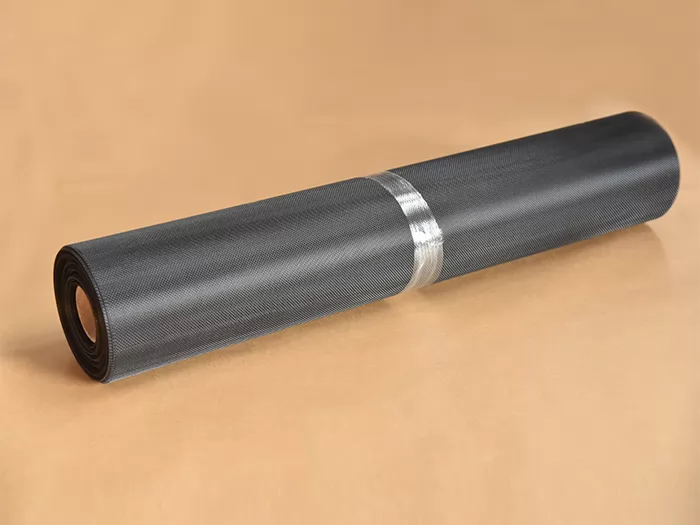
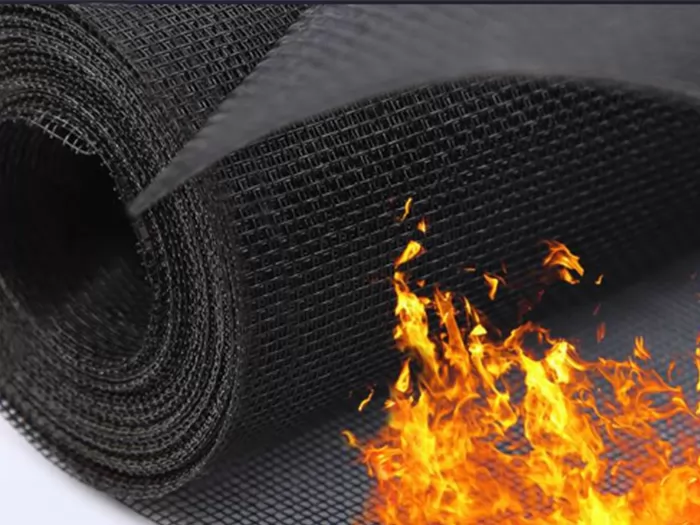
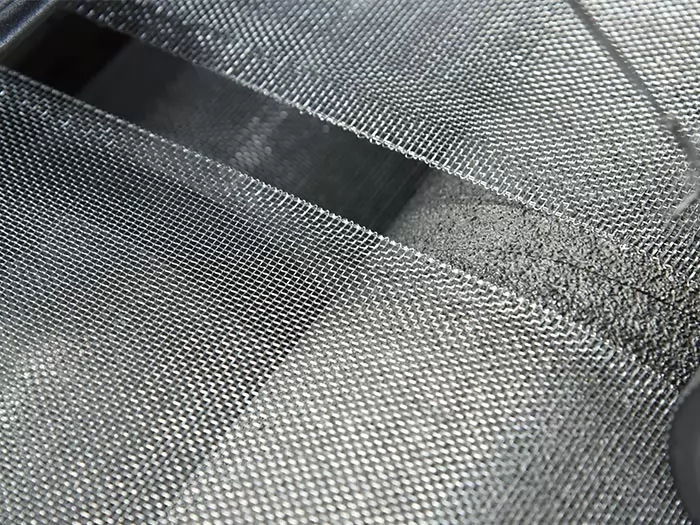
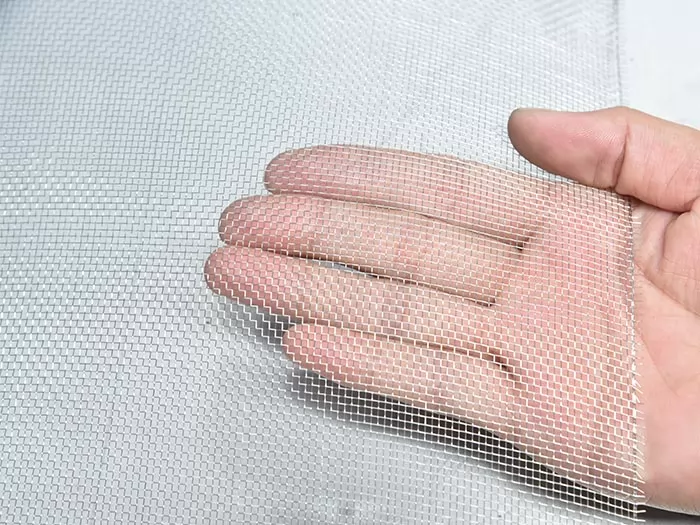
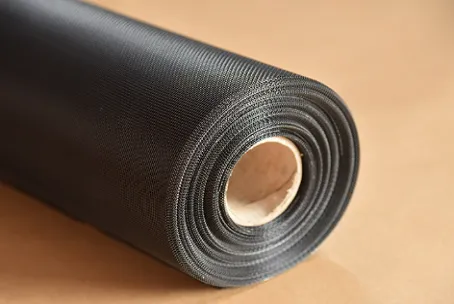
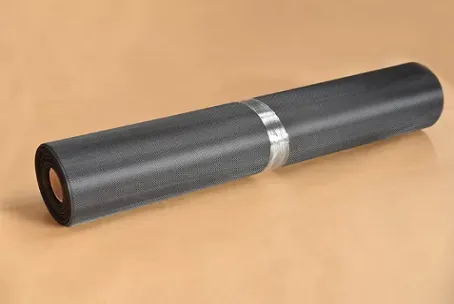
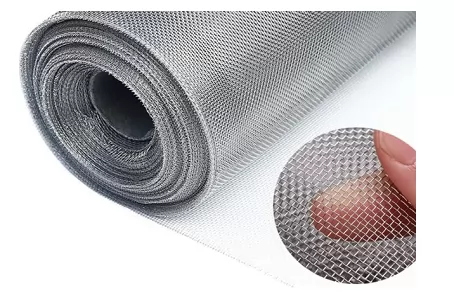
Wire mesh filters are metallic networks woven from stainless steel, alloy, or specialty wire, forming accurate and uniform pore structures. They deliver reliable particulate removal while maintaining optimal flow rates and durability.
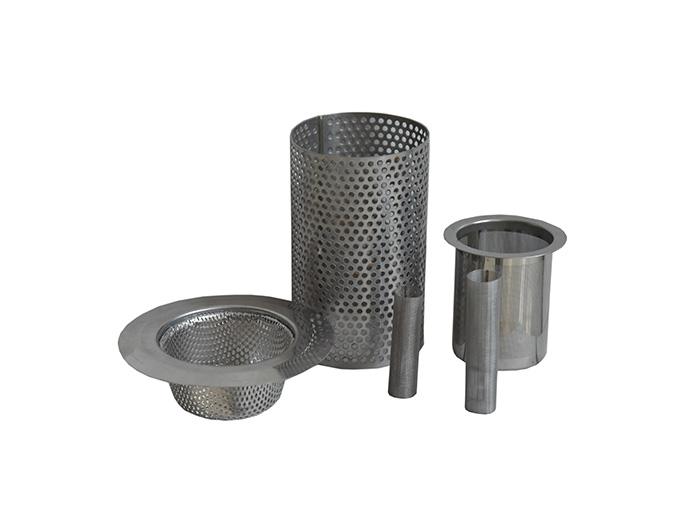
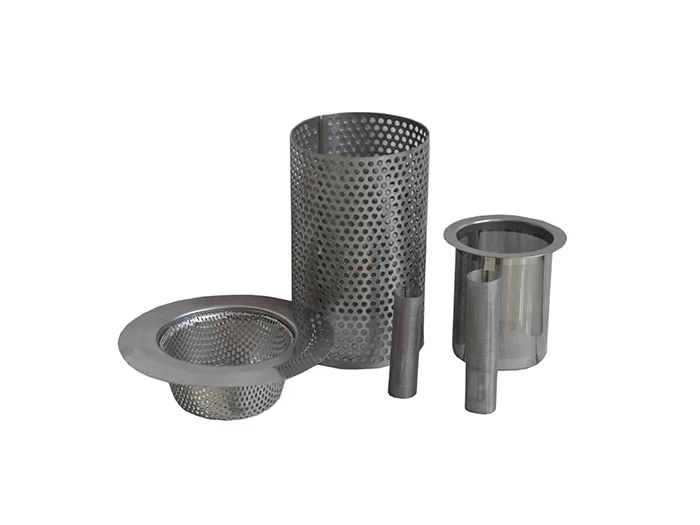
Wire mesh filters are precision-fabricated filtration elements formed by cutting, shaping, and assembling stainless steel woven wire cloth into functional geometries — discs, cylinders, cones, baskets, and multi-layer panels. Unlike disposable media such as paper or synthetic fiber, wire mesh filters are reusable, dimensionally stable under high pressure and elevated temperature, and fully cleanable by backflushing, ultrasonic agitation, or chemical washing. At Jiushen, every filter element is fabricated in-house from our own woven wire cloth, giving us complete control over mesh specification, material grade, and dimensional accuracy from raw wire to finished product.
Jiushen supplies wire mesh filters to customers across chemical processing, petroleum refining, food and beverage, pharmaceutical, hydraulic systems, and water treatment industries worldwide. With an in-house fabrication workshop adjacent to our 15,000 m² weaving facility in Anping County, we combine raw material traceability, weave-level quality control, and finished-filter dimensional verification under one roof — a capability most distributors and trading companies cannot replicate.
| Parameter | Specification |
|---|---|
| Filtration Rating | 1 µm – 500 µm (depending on weave type) |
| Alloy Grades | 304, 304L, 316, 316L, 310, Hastelloy, Monel (on request) |
| Available Forms | Filter disc, cylinder, basket, cone, pleated cartridge, multi-layer panel |
| Joining Method | TIG/laser welding, resistance welding, epoxy bonding |
| Max Operating Temperature | Up to 600 °C (five-layer sintered construction) |
| Surface Finish | Ultrasonic-cleaned as standard; electropolished available |
| Layer Configuration | Single-layer to five-layer sintered laminate |
| Quality Standard | ISO 9001:2015 · ASTM E2016 · ASTM E2814 |
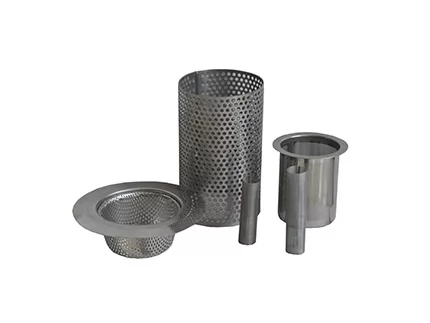
The filtration geometry determines flow area, dirt-holding capacity, pressure drop, and ease of installation. Jiushen fabricates all major filter element forms from our own woven wire cloth, with custom dimensions available on request.
1. Filter Discs
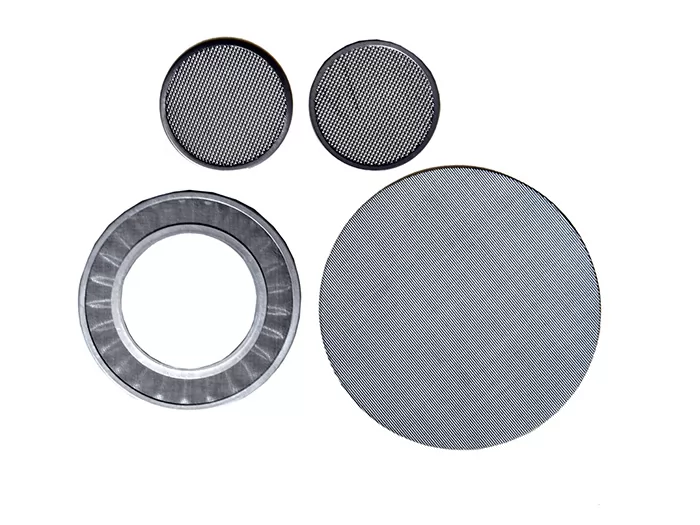
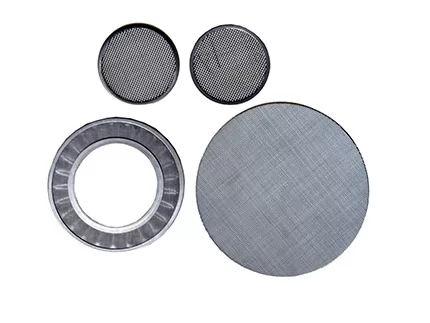
Flat circular elements punched or cut to customer-specified outside diameter, inside diameter, and mesh count. Available as single-layer or multi-layer (2–5 layers with protective mesh on both faces). Typical applications include polymer extrusion screen packs, hydraulic valve inlet screens, and laboratory analysis sieves. Standard diameters: 10 mm – 600 mm. Custom sizes and non-round shapes (square, hexagonal) available on request.
2. Cylindrical Filter Elements (Cartridges)
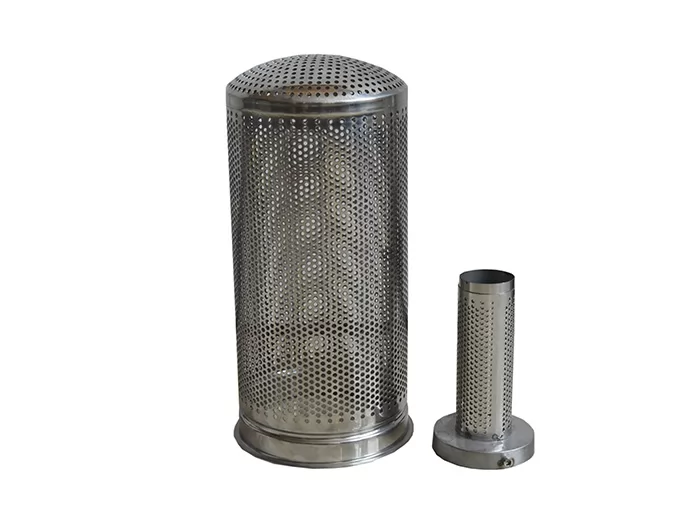
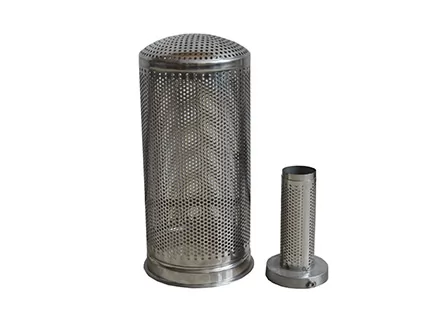
Wire mesh cloth formed into cylinders with welded or brazed seams and end caps. Used in basket strainer housings, inline pipeline filters, and simplex/duplex filter vessels. The mesh cloth is typically sandwiched between a coarse outer support layer and a fine inner filter layer, with a perforated metal tube as the core. Filtration ratings from 10 µm (Dutch weave) to 500 µm (plain weave) depending on mesh specification.
3. Basket Strainers
Deep-drawn or seam-welded cylindrical baskets with flanged or plain top edges for installation in Y-type, T-type, and simplex strainer housings. Basket mesh is selected from 40 mesh (420 µm) for coarse protection up to 200 mesh (74 µm) for fine straining. Typical materials: 304 or 316L stainless steel. Bottom can be closed-bottom or open-bottom per housing design.
4. Conical / Cone Filters
Conical filter elements installed in pipeline ends and equipment inlets as start-up strainers or permanent pre-filters. The cone geometry maximizes filter area within a limited inline space. Standard cone half-angles range from 15° to 45°. Wire mesh rating is selected based on the downstream equipment's particle tolerance.
5. Pleated Wire Mesh Cartridges
The wire mesh cloth (typically Dutch weave) is machine-pleated to multiply the effective filter area by 3–6× compared to a smooth cylinder of the same diameter and length. Inner and outer perforated support tubes are welded to provide rigidity. Pleated cartridges are preferred in high-flow, fine-filtration applications where pressure drop must be minimized — including hydraulic oil systems, lube oil systems, and chemical dosing lines. Filtration rating: 5 µm – 100 µm absolute.
6. Five-Layer Sintered Mesh Panels & Elements
Five layers of wire cloth — two protective surface layers, two strength-support layers, and one precision filter layer — are vacuum-sintered at 1,100 °C to form an integrated porous metal panel. The sintering process creates diffusion-welds at every wire intersection, producing a rigid composite with higher burst pressure, better thermal stability, and easier backwashing than un-sintered multi-layer mesh. Filtration ratings: 1 µm – 200 µm absolute. Standard thickness: 1.7 mm. Maximum panel size: 1,219 mm × 1,219 mm. Suitable for polymer melt filtration, pharmaceutical sterilizing vents, and high-pressure hydraulic elements.
The table below lists standard filtration ratings and layer structures for five-layer sintered Dutch weave mesh panels. Custom ratings between 1 µm and 200 µm are available. Material: 316L stainless steel as standard; 304, 304L, 316, and specialty alloys on request.
| Code | Nominal Rating (µm) | Layer Structure (mesh) | Thickness (mm) |
|---|---|---|---|
| MIC1L5 | 1 | 200 / 400×2800 / 200 / 12×64 / 64×12 | 1.70 |
| MIC2L5 | 2 | 100 / 325×2300 / 100 / 12×64 / 64×12 | 1.70 |
| MIC5L5 | 5 | 100 / 200×1400 / 100 / 12×64 / 64×12 | 1.70 |
| MIC10L5 | 10 | 100 / 165×1400 / 100 / 12×64 / 64×12 | 1.70 |
| MIC20L5 | 20 | 100 / 165×800 / 100 / 12×64 / 64×12 | 1.70 |
| MIC40L5 | 40 | 100 / 325 / 100 / 12×64 / 64×12 | 1.70 |
| MIC75L5 | 75 | 100 / 200 / 100 / 12×64 / 64×12 | 1.70 |
| MIC100L5 | 100 | 100 / 150 / 100 / 12×64 / 64×12 | 1.70 |
Standard panel porosity: 37%. Standard available sheet sizes: 480×480 mm, 500×1,000 mm, 600×1,200 mm, 1,000×1,000 mm, and 1,219×1,219 mm (maximum). All sizes can be cut and fabricated into filter discs, cylinders, and cartridge elements.
The weave pattern of the base mesh cloth is the primary determinant of filtration rating, flow resistance, and mechanical durability. The following guide covers the most common industrial filtration scenarios.
| Application | Recommended Weave | Rating Range | Typical Grade |
|---|---|---|---|
| Hydraulic oil filtration | Plain Dutch Weave | 18–100 µm absolute | 304 / 316 |
| Polymer melt extrusion | Plain Dutch / Twill Dutch | 5–80 µm absolute | 316L |
| Pharmaceutical fine filtration | Twill Dutch Weave | 2–25 µm absolute | 316L (FDA) |
| Water / drinking water straining | Plain Dutch Weave | 50–300 µm | 316L |
| Gas / air filtration | Reverse Dutch Twill | 15–100 µm | 304 / 316 |
| Petrochemical / oil exploration | Reverse Plain Dutch Weave | 25–450 µm | 316 / 316L |
| Food & beverage processing | Plain or Dutch Weave | 50–500 µm | 316L (FDA) |
| High-temperature gas / sintering | Five-Layer Sintered | 1–200 µm absolute | 316L / 310 |
| Coarse pipeline straining | Plain Weave (Square) | 150–2,000 µm | 304 / 316 |
All wire mesh filter elements at Jiushen are fabricated from our own woven wire cloth. Incoming wire is verified by in-house spectrometer and tensile testing machine against ASTM A580/A580M-18 before weaving. Each completed filter element is tagged with the originating wire lot and weaving order for full traceability.
| Grade | Key Property | Best For |
|---|---|---|
| 304 | General corrosion resistance, cost-effective | Water treatment, air filtration, coarse straining |
| 316 / 316L | Mo-enhanced chloride and pitting resistance; 316L is FDA-recognized | Chemical, pharmaceutical, food & beverage, marine |
| 310 | Oxidation resistance to 1,100 °C | High-temperature gas filtration, kiln off-gas |
| Hastelloy C-276 | Outstanding resistance to strong oxidizing and reducing acids | Concentrated sulfuric acid, wet scrubbers, HCl service |
| Monel 400 | High strength in seawater and hydrofluoric acid | Marine service, HF alkylation, brine filtration |
| Duplex 2205 | High strength + excellent stress corrosion cracking resistance | Offshore oil & gas, desalination, high-pressure filtration |
Chemical & Petrochemical Processing
Cylindrical and basket wire mesh filters are used as reactor inlet screens, catalyst bed retainers, and column internals. 316L grade is standard for acidic or chloride-bearing process streams. Hastelloy or Duplex 2205 elements are available for particularly aggressive media. Reverse Dutch Plain Weave and five-layer sintered elements are selected for high-pressure differential applications.
Hydraulic Oil & Lube Oil Filtration
Pleated wire mesh cartridges and Dutch weave filter discs protect pumps, valves, and actuators from particle contamination. Plain Dutch weave provides absolute ratings of 18–100 µm; Twill Dutch weave extends down to 5 µm. Wire mesh elements are backflushable without media migration — a key advantage over fiber cartridges in recirculating oil systems.
Water & Wastewater Treatment
Stainless steel basket strainers and cylindrical filter elements protect downstream membranes and UV systems from particulate damage. 316L elements are specified for seawater desalination pre-filtration and ballast water treatment. Typical mesh ratings: 50–500 µm for coarse pre-filtration, 10–50 µm for fine straining ahead of membrane systems.
Food, Beverage & Pharmaceutical
FDA-compliant 316L wire mesh filter discs and cylinders are used in juice clarification, sugar syrup filtration, dairy processing, and pharmaceutical API filtration. Ultrasonic cleaning and electropolishing options ensure surfaces meet sanitary requirements. Five-layer sintered panels are selected for sterile vent filtration in bioreactors and freeze-dryers.
Polymer Extrusion & Compounding
Multi-layer screen packs — assembled from 20/80/20-mesh combinations or custom layer stacks — protect extruder dies and downstream equipment from gel particles and contamination. Jiushen supplies standard and custom-diameter disc packs in plain Dutch and Twill Dutch weave with breaker plate configurations on request. Rating: 5–80 µm depending on layer count and weave.
Mining, Minerals & Industrial Separation
Basket strainers and conical startup strainers protect slurry pumps, grinders, and heat exchangers during commissioning and normal operation. Plain weave elements in coarser mesh counts (10–80 mesh) handle high-solids-loading environments where fine Dutch weave would blind prematurely.
Because Jiushen weaves its own mesh cloth, the fabrication process begins with verified raw material rather than purchased mesh of uncertain provenance. The following steps apply to all wire mesh filter orders:
Step 1 — Wire Incoming Inspection. Alloy composition verified by in-house spectrometer; wire diameter measured by micrometer. Compliant with ASTM A580/A580M-18. Non-conforming wire is rejected before weaving begins.
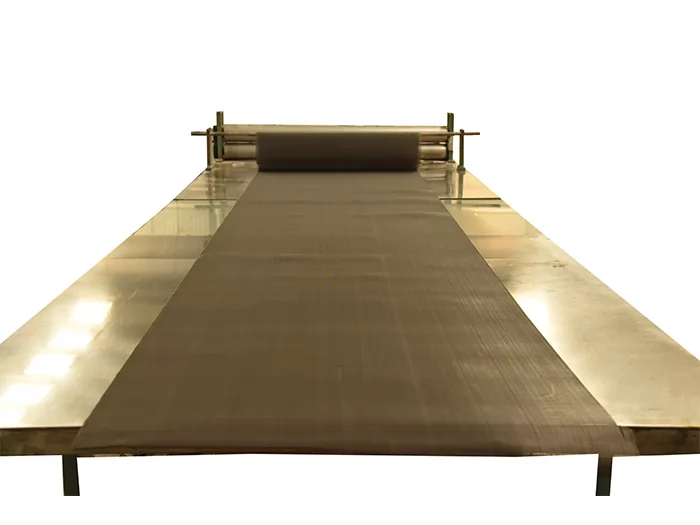
Step 2 — Weaving & In-Process Control. Precision looms equipped with electronic error-prevention sensors halt production if mesh count or wire tension deviates from order tolerances. Each roll receives a traceable label encoding production date, equipment code, and serial number.
Step 3 — Pre-Fabrication Inspection. Finished cloth is inspected per ASTM E2016 / E2814 for mesh count, aperture dimensions, surface condition, and roll width before being released to the fabrication workshop.
Step 4 — Ultrasonic Cleaning. All mesh cloth undergoes ultrasonic cleaning to remove drawing lubricant, metal fines, and surface contaminants before cutting and assembly. This step is critical for pharmaceutical and food-contact filter elements.
Step 5 — Cutting, Forming & Assembly. CNC-controlled cutting equipment ensures dimensional repeatability. Seam joining is performed by TIG welding, resistance spot welding, or epoxy bonding depending on the element design. End caps and flanges are welded and ground flush.
Step 6 — Finished Filter Inspection. Dimensional verification (OD, ID, length, end-cap concentricity), visual inspection, and hydraulic pressure test (on request) before packing. Electropolishing and passivation are available as post-fabrication surface treatments.
All wire mesh filter orders are covered by Jiushen's ISO 9001:2015 quality management system. Full material certificates, dimensional inspection reports, and traceability documentation are available with each shipment.
To generate an accurate quotation and lead time, please provide the following information when submitting your filter inquiry:
1. Filter element form: disc / cylinder / basket / cone / pleated cartridge / sintered panel
2. Dimensions: outside diameter, inside diameter, length/height, end cap type
3. Filtration rating: required micron rating (nominal or absolute) and particle type to be retained
4. Material grade: 316L preferred, or specify alloy if service conditions require a specialty grade
5. Layer construction: single-layer, multi-layer, or five-layer sintered
6. Operating conditions: working pressure, working temperature, fluid type
7. Surface finish: standard (ultrasonic cleaned), electropolished, or passivated
8. Quantity: number of pieces required and whether this is a one-time or repeat order
If you are unsure of the weave type or mesh count required, describe your application and flow conditions and our engineering team will recommend the appropriate specification. We respond to all technical inquiries within one business day.
Q: What is the difference between a wire mesh filter and a sintered mesh filter?
A single-layer or multi-layer wire mesh filter uses woven wire cloth layers mechanically assembled (stacked or welded) together. The individual wire intersections are not bonded, so the construction is slightly flexible and the layers can theoretically separate under extreme conditions. A sintered mesh filter uses the same wire cloth layers but bonds every wire intersection by diffusion-welding in a vacuum furnace at 1,100 °C, creating a rigid, integrated porous metal plate. Sintered mesh has higher burst pressure, better resistance to thermal cycling, and more consistent pore geometry — at higher cost. For most filtration ratings above 20 µm, multi-layer woven mesh is sufficient and more economical. Below 10 µm, or for high-temperature or high-differential-pressure service, sintered mesh is generally preferred.
Q: Can wire mesh filters be cleaned and reused?
Yes. Wire mesh filter elements can be cleaned by backflushing with pressurized fluid, ultrasonic agitation in a cleaning tank, chemical soaking in compatible solvents or alkaline cleaners, or high-pressure water jetting. Cleaning interval depends on the solids loading in the process stream. A well-maintained stainless steel wire mesh filter element typically lasts 5–10 years in service, compared to a typical disposable cartridge replacement cycle of weeks to months. This reusability significantly reduces total filtration cost over the equipment life.
Q: What is the finest filtration rating available from Jiushen wire mesh filters?
Using five-layer sintered Twill Dutch weave construction (500×3,600 mesh), Jiushen can achieve absolute filtration ratings down to 1 µm. For single-layer Dutch weave elements (non-sintered), the practical lower limit is approximately 5 µm absolute using a 325×2,300 Twill Dutch weave. For coarser applications, plain weave filter discs and baskets cover ratings from 20 µm up to several millimeters.
Q: What joining methods are available for filter element fabrication?
Jiushen uses TIG (tungsten inert gas) welding for 316L and most stainless steel alloys, resistance spot welding for thinner mesh assemblies, and laser welding for high-precision or small-diameter elements. Epoxy bonding (food-grade or high-temperature epoxy) is available where welding is unsuitable — for example, when joining mesh to a non-metallic support ring, or for cartridge end caps in low-temperature non-welded assemblies. The choice of joining method is specified at the quotation stage based on element design, material, and service conditions.
Q: Can Jiushen supply wire mesh filters to drawings or replace existing OEM elements?
Yes. We routinely produce filter elements as direct replacements for OEM parts based on customer-supplied drawings, samples, or dimensional data sheets. If you can provide an existing element (or its dimensions and mesh specification), we can reverse-engineer and manufacture a functionally equivalent replacement — typically at a significantly lower cost than the original OEM price. Please contact us with your drawing or sample for a replacement quotation.
For technical inquiries, custom filter specifications, or to request a sample, please contact the Jiushen engineering team. We respond within one business day.
Wire Mesh Filters
Wire Mesh Filters
Wire Mesh Filters
Copyright © Hebei Jiushen Wire Weaving Co., Ltd. All Rights Reserved. |
Sitemap
| Technical Support: