+86 182 3185 8969
+86 182 3185 8969

Choosing between a 304 stainless steel window screen and a 316 stainless steel window screen is not simply a matter of selecting the more expensive material. For importers, window and door manufacturers, building contractors, screen fabricators and wholesale distributors, the correct grade depends on where the screen will be installed, how much chloride it will encounter, how often it will be cleaned and how long the finished product is expected to remain in service.
Grade 304 is widely used for residential windows, commercial buildings and general insect-screen applications. Grade 316 contains molybdenum, which gives it better resistance to pitting and crevice corrosion in environments containing salt and chlorides. This makes 316 particularly relevant for coastal projects, marine environments and certain industrial locations. However, 316 is not automatically necessary for every order, and using it in a low-risk environment may increase procurement costs without delivering a meaningful commercial benefit.
The purpose of this guide is to help bulk buyers choose the right stainless steel grade based on actual operating conditions rather than relying on a simple “304 is standard and 316 is better” comparison.
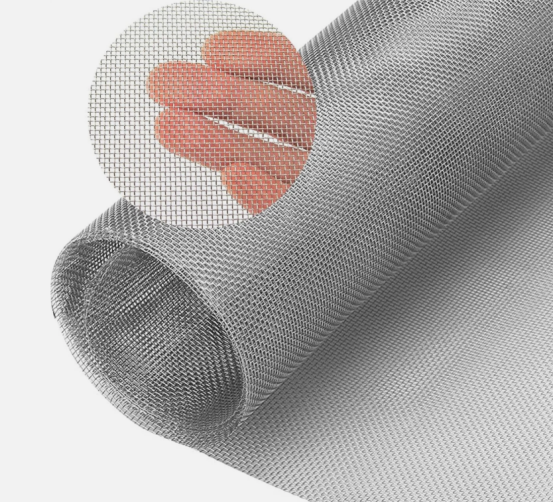
Choose 304 stainless steel window screen when the product will be used in:
· Inland residential buildings
· Offices, schools and commercial properties
· Dry or moderately humid climates
· Normal urban environments without heavy salt exposure
· Standard mosquito and insect-screen applications
· Projects with regular cleaning and maintenance
· Price-sensitive wholesale markets
Choose 316 stainless steel window screen when the product will be used in:
· Coastal cities and seaside buildings
· Island markets
· Marine or harbor areas
· Locations exposed to salt spray
· Swimming pool facilities
· Industrial areas containing chloride-bearing pollutants
· Projects requiring longer service life with lower corrosion risk
· Premium window and door systems sold with extended warranties
For many buyers, the best procurement strategy is not to select one grade for every customer. A distributor may stock 304 as the standard product and offer 316 as a premium option for coastal, industrial and high-value projects.
Grade 304 is one of the most widely used austenitic stainless steels. It is commonly described as an 18/8 stainless steel because a typical composition contains approximately 18% chromium and 8% nickel. It offers good general corrosion resistance, formability and durability for a broad range of indoor and outdoor applications.
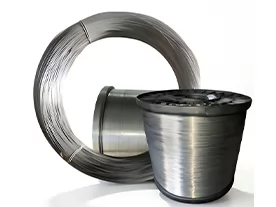
In window-screen production, 304 stainless steel wire can be woven into fine mesh with different combinations of:
· Mesh count
· Wire diameter
· Aperture size
· Roll width
· Roll length
· Surface color
· Coating type
· Edge treatment
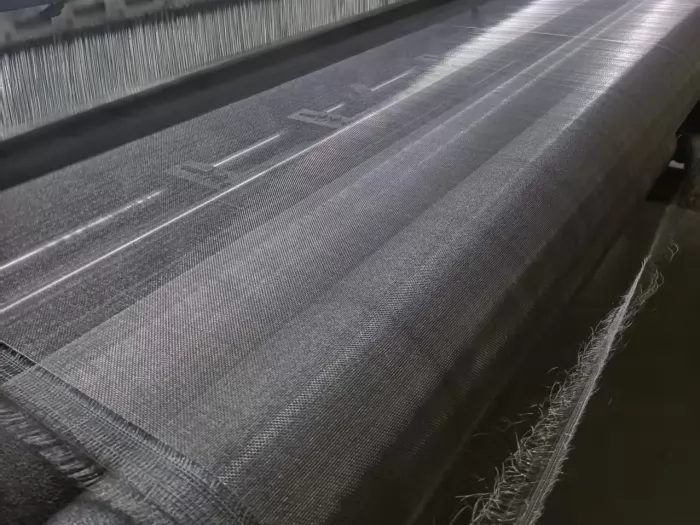
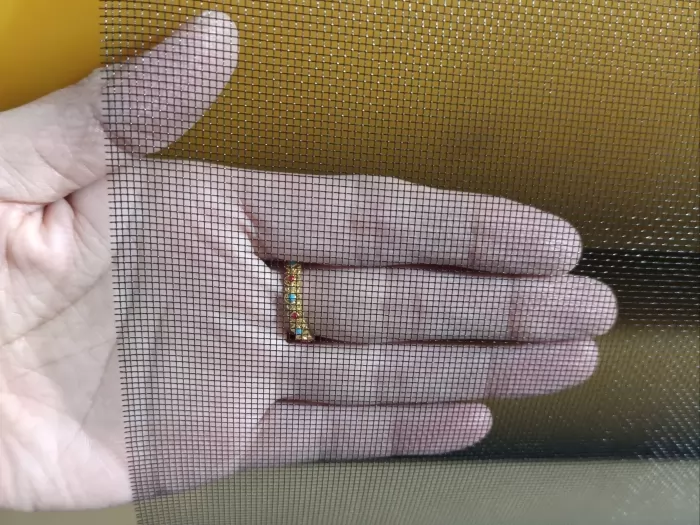
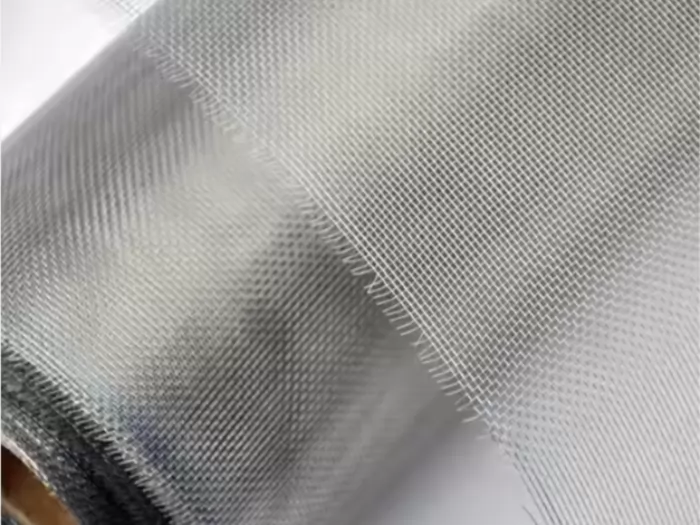
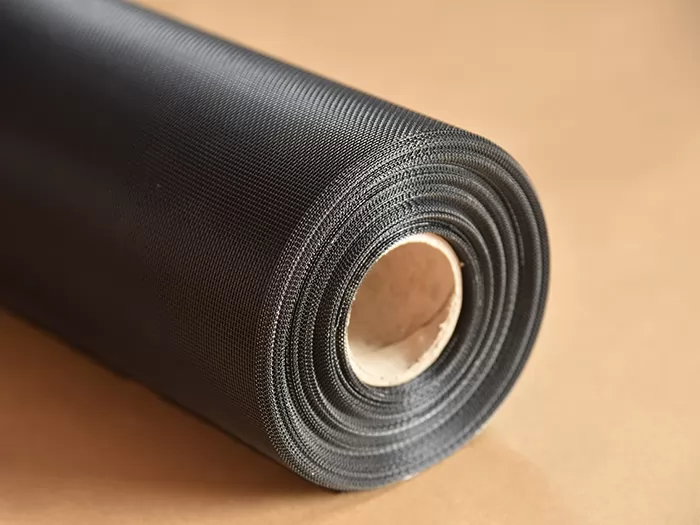
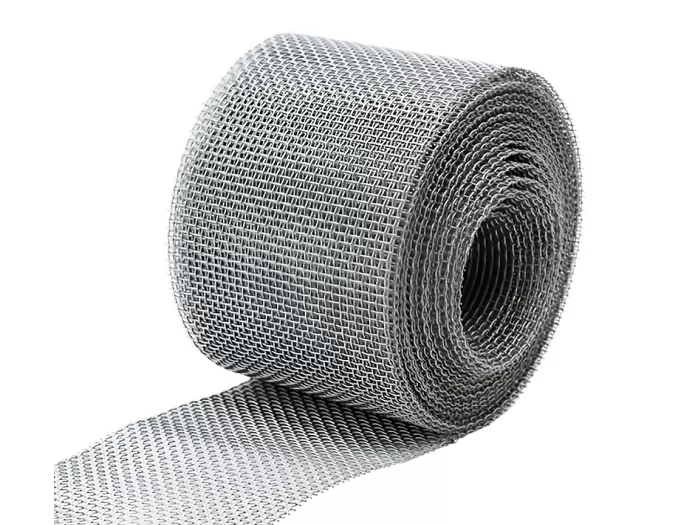
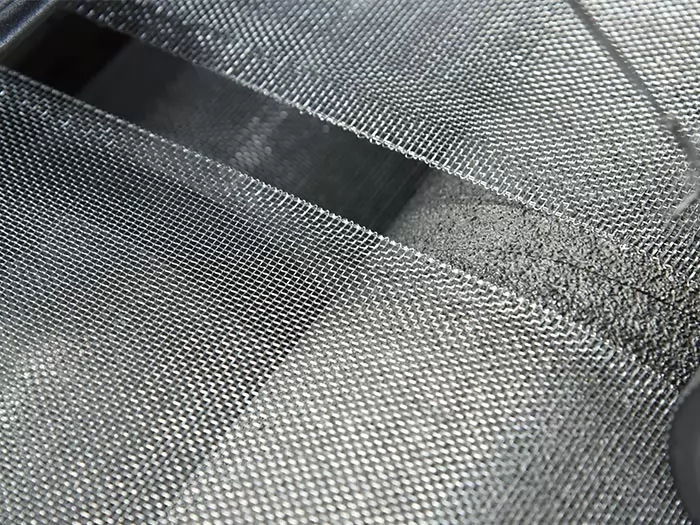
A typical 304 stainless steel insect screen may use a plain-weave construction such as 18 × 14 mesh, although exact specifications vary according to insect-control requirements, ventilation targets and regional window-system standards. Commercially available stainless steel insect screens also demonstrate that mesh count, wire diameter and open area must be evaluated together rather than independently.
The primary advantage of grade 304 is its balance of performance, availability and cost.
It provides substantially greater strength and durability than many lightweight fiberglass screens. It is suitable for buyers who need a metal screen that can resist ordinary wear, maintain its shape and support long-term use in window and door frames.
Stainless steel screening is also valued for its ability to provide insect protection while maintaining airflow. Depending on wire diameter, mesh opening and surface finish, it can also deliver good outward visibility.
For bulk purchasers, grade 304 also offers commercial advantages:
· It is widely available from stainless steel wire and mesh manufacturers.
· Standard specifications are easier to source.
· Lead times may be shorter than for less common grades.
· The initial material cost is generally lower than 316.
· It suits a wide range of mainstream residential and commercial markets.
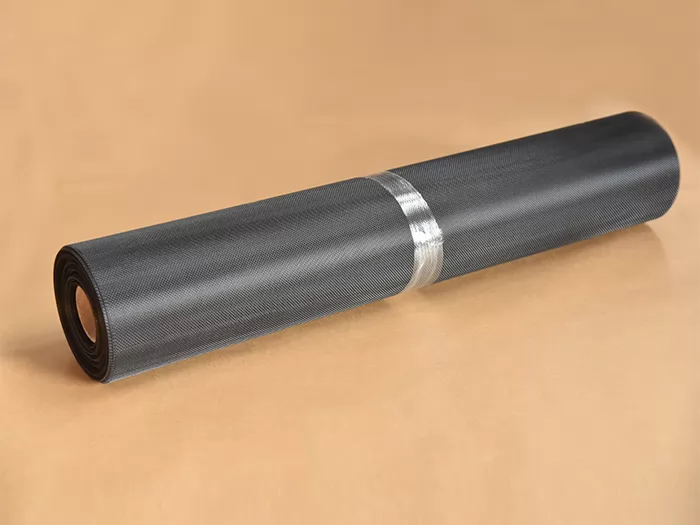
· It can be supplied in rolls for cutting, framing and secondary fabrication.
Grade 304 is corrosion resistant, but it is not immune to corrosion.
The main concern is prolonged exposure to chlorides. Chlorides may come from:
· Sea spray
· Salt-laden coastal air
· Road de-icing salts
· Pool chemicals
· Industrial emissions
· Cleaning products containing chloride compounds
· Contaminated dust deposited on the screen
If chloride-containing moisture remains on the wire surface, localized pitting or staining may develop. Fine wire screens can be more sensitive to material loss than thick metal components because the wire diameter is small. Even limited localized corrosion can affect appearance, mesh strength and customer confidence.
Therefore, buyers should avoid specifying 304 solely because a supplier calls it “rustproof.” Stainless steel is corrosion resistant, but its performance always depends on the grade, surface condition, design, contamination level and maintenance environment.
Grade 316 is also an austenitic stainless steel, but it contains molybdenum in addition to chromium and nickel. This alloying difference improves resistance to chloride-related pitting and crevice corrosion compared with grade 304.
For stainless steel window screens, this improvement is important because the product has:
· A large exposed surface area
· Fine-diameter wires
· Numerous wire intersections
· Potential salt-retention points
· Possible contact with aluminum or steel frames
· Outdoor exposure over many years
These characteristics can create conditions in which moisture, dust and salt deposits remain on the mesh. In aggressive environments, using 316 can reduce the likelihood of premature discoloration and localized corrosion.
Grade 316 is generally preferred where corrosion risk is more severe.
Its advantages include:
· Better resistance to salt-containing environments
· Improved resistance to chloride-induced pitting
· Better suitability for coastal and marine locations
· Lower risk of corrosion-related complaints in premium projects
· Greater confidence for long-service-life specifications
· Better alignment with coastal construction requirements
· Stronger positioning for high-end window and security-screen systems
The principal atmospheric corrosion risk for stainless steel is often linked to halides, especially chlorides carried by sea spray, de-icing salts and some industrial emissions. Coastal and certain urban environments can therefore be more aggressive than ordinary inland locations.
The main disadvantage of 316 is cost. It normally has a higher raw-material price because of its alloy composition.
However, bulk buyers should evaluate total cost rather than only unit price. A lower-priced 304 product may become more expensive if corrosion leads to:
· Replacement claims
· Reinstallation labor
· Project delays
· Distributor compensation
· Loss of customer confidence
· Warranty disputes
· Damage to a private-label brand
At the same time, paying for 316 is not always justified. If the screen is installed in a dry inland environment, protected from chloride contamination and regularly maintained, 304 may already provide the required service life.
Another limitation is that 316 is still not completely resistant to every environment. Stainless steels can experience pitting and crevice corrosion in chloride-bearing conditions, especially where salts accumulate, moisture remains trapped or cleaning is insufficient. Buyers should not market 316 as permanently rust-free under all marine conditions.
Comparison Factor | 304 Stainless Steel Window Screen | 316 Stainless Steel Window Screen |
General corrosion resistance | Good | Very good |
Resistance to chloride exposure | Moderate | Better |
Coastal suitability | Limited to lower-risk or well-maintained locations | Preferred for many coastal applications |
Marine atmosphere | Not generally the first choice | More suitable, but still requires correct design and maintenance |
Inland residential use | Highly suitable | Usually unnecessary unless required by specification |
Industrial environment | Depends on contaminants | Better where chloride-related corrosion is a concern |
Initial material cost | Lower | Higher |
Availability | Widely available | Available but sometimes subject to higher MOQ or longer lead time |
Typical market position | Standard commercial grade | Premium or project-specific grade |
Risk of over-specification | Low | Higher in ordinary environments |
Risk of under-specification | Higher in salty environments | Lower, provided the environment is within 316’s capability |
Distance from the sea is an important factor, but it should not be used alone.
A building several kilometers from the coastline may still receive salt-laden air because of:
· Prevailing wind direction
· Local topography
· Building height
· Storm activity
· Lack of rainfall
· Nearby harbors
· Salt accumulation on sheltered façades
A high-rise building may experience different exposure from a low-rise building in the same city. Screens installed on wind-facing elevations may also receive more salt than screens on protected sides.
For coastal projects, buyers should ask the end customer or contractor for a clear environmental classification rather than relying only on the city name.
Rain can wash some contaminants away, but sheltered screens may not receive enough natural cleaning.
Screens installed under deep roofs, balconies or recessed façades can accumulate salt and dust. If deposits are not removed, the local chloride concentration may increase when moisture evaporates.
Maintenance planning should therefore be included in material selection. In an environment with regular freshwater washing, 304 may perform better than expected. In an environment with no maintenance and constant salt deposition, even 316 requires careful evaluation.
Material grade is only one part of screen durability.
A very fine 316 wire is not automatically stronger than a thicker 304 wire. Buyers must compare:
· Wire diameter
· Tensile performance
· Mesh count
· Aperture
· Weaving consistency
· Surface defects
· Finished-roll flatness
Thicker wire generally provides greater physical strength, but it may reduce open area, airflow and visibility. Fine wire improves visual transparency but may be more sensitive to handling damage and localized material loss.
The correct comparison is therefore not simply “304 versus 316.” It is:
304 or 316, at what wire diameter, mesh count and finished specification?
Not every stainless steel window screen serves the same purpose.
A fine insect screen, a pet-resistant screen and a security screen require very different specifications.
The main priorities are:
· Mosquito and insect exclusion
· Airflow
· Visibility
· Lightweight handling
· Easy cutting and framing
The priorities may include:
· Improved resistance to impact
· Better dimensional stability
· Longer service life
· Use in schools, apartments or high-traffic buildings
The priorities may include:
· Thick wire
· High-strength mesh
· Resistance to cutting or impact
· Frame anchoring
· Locking-system compatibility
· Compliance with relevant security standards
A buyer should not assume that changing from 304 to 316 will convert a standard insect screen into a security screen. Security performance depends on the complete system, including wire diameter, mesh construction, frame, fasteners and installation method.
A premium mesh can still fail as part of a poorly designed system.
Buyers should confirm compatibility between the stainless steel screen and:
· Aluminum frames
· Stainless steel frames
· Carbon steel fasteners
· Screws and clips
· Rubber or polymer seals
· Adhesives
· Surface coatings
Contact between dissimilar metals, trapped moisture and damaged coatings can create localized corrosion problems. The screen must also be installed without residues from carbon steel tools, grinding dust or contaminated work surfaces.
When investigating a corrosion complaint, buyers should avoid blaming the mesh grade before checking the entire frame assembly.
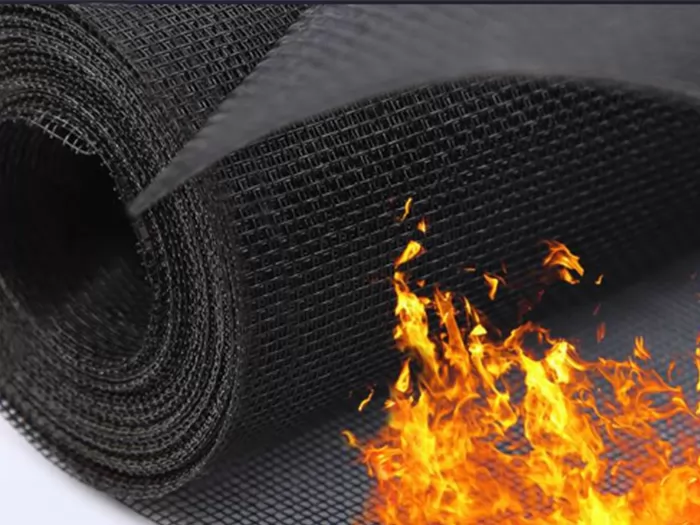
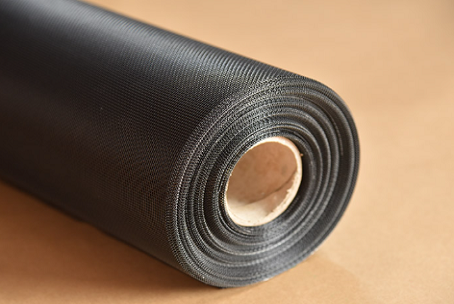
Natural stainless steel mesh and black-coated stainless steel mesh may behave differently in service.
A black coating can improve outward visibility and match dark-colored window frames. It may also provide an additional barrier between the metal and the environment. However, coating quality is critical.
Buyers should ask:
· What coating system is used?
· Is the coating applied before or after weaving?
· What is the target coating thickness?
· How is adhesion tested?
· Is the coating suitable for UV exposure?
· Can the coating crack during forming?
· How are cut edges treated?
· Is color consistency controlled between production batches?
A poor coating may peel, fade or trap contaminants. A well-produced coating should be evaluated as part of the complete product specification, not treated as a decorative detail.
Surface condition also affects stainless steel performance. Industry guidance notes that actual corrosion behavior depends not only on alloy composition but also on surface finish and service conditions.
A distributor selling low-cost replacement screen rolls may make a different material decision from a contractor supplying windows for a coastal hotel.
Buyers should define:
· Expected service life
· Warranty period
· Cost of replacement
· Installation labor
· Accessibility of the screen
· Consequences of failure
· Customer expectations
· Brand positioning
For an easily replaceable inland residential screen, 304 may provide the best value.
For a high-rise coastal project where replacement requires scaffolding or façade access equipment, the additional cost of 316 may be small compared with future replacement expenses.
Grade 304 is often the better choice when all of the following conditions apply:
· The project is inland.
· Chloride exposure is low.
· The building is not near a pool, harbor or salt-processing facility.
· Screens will be cleaned periodically.
· The buyer serves a price-sensitive market.
· The required product is a standard insect screen.
· Replacement access is easy.
· No project specification requires 316.
· The supplier can provide verified material documentation.
For distributors, 304 is usually suitable as the primary stock grade because it covers a broad range of general applications. Standardizing several popular mesh counts and roll widths can also improve inventory turnover.
A typical distributor strategy could include:
· 304 natural-color screen for general projects
· 304 black-coated screen for premium residential windows
· 316 screen as a special-order or coastal-market option
· Heavy-duty 316 mesh for security-screen fabricators
This approach reduces inventory pressure while still allowing the distributor to serve high-corrosion markets.
Buyers should seriously consider 316 when one or more of the following conditions exist:
· The project is located in a coastal or island environment.
· The screen will receive salt spray.
· The building is near a harbor or marina.
· The product is installed near a swimming pool.
· Chloride-containing cleaning chemicals may be used.
· The screen will be difficult or expensive to replace.
· The customer requires a long warranty.
· The finished product is positioned as a premium window system.
· Previous 304 screens have shown staining or pitting.
· The project specification explicitly requires 316.
· Environmental maintenance is limited.
For project orders, buyers should document the reason for selecting 316. This information may later support pricing, warranty discussions and customer approval.
The term “marine grade” is commonly used for 316 stainless steel, but bulk buyers should use it carefully.
Grade 316 has better chloride resistance than 304, but it is not equivalent to unlimited resistance in direct seawater exposure. Salt concentration, temperature, surface deposits, crevices, oxygen availability and cleaning frequency all affect performance.
For ordinary coastal window-screen applications, 316 is often a practical upgrade. For direct, continuous or highly aggressive marine exposure, a materials specialist may need to evaluate whether a higher-alloy grade or alternative system is required.
The correct marketing statement is:
316 provides improved resistance for many coastal and chloride-exposed applications.
The risky marketing statement is:
316 can never rust in a marine environment.
The second statement creates unrealistic expectations and potential warranty problems.
Material substitution is a serious concern in price-driven procurement.
Visual inspection cannot reliably distinguish 304 from 316. Buyers should establish a verification process before placing a large order.
Ask the supplier to provide:
· Raw-material certificate
· Chemical composition report
· Material grade declaration
· Batch or heat number where applicable
· Finished-product inspection report
· Purchase-order traceability
For large or project-specific orders, the required documentation should be written into the purchase contract.
Positive Material Identification can help verify alloy composition. Handheld XRF testing is commonly used to identify alloying elements, including the molybdenum that differentiates 316 from 304.
Testing can be performed:
· On incoming raw wire
· During production
· Before shipment
· During third-party inspection
· After goods arrive at the buyer’s warehouse
The inspection plan should specify how many rolls or batches will be tested.
A magnet test is not a reliable method for confirming 304 or 316.
Both grades are austenitic, but cold working during wire drawing can cause some magnetic response. A screen showing slight magnetism is not automatically a lower grade, and a non-magnetic screen is not automatically 316.
Each roll should be clearly labeled with:
· Material grade
· Mesh count
· Wire diameter
· Roll width
· Roll length
· Batch number
· Production date
· Purchase-order reference
Clear labeling reduces warehouse errors and prevents 304 and 316 rolls from being mixed during distribution or fabrication.
For most inland residential, office and commercial applications, 304 stainless steel window screen offers the best balance of corrosion resistance, availability and cost.
For coastal, chloride-exposed, poolside, industrial or difficult-to-replace applications, 316 stainless steel window screen is usually the safer long-term choice.
However, the final decision should not be based on grade alone. Bulk buyers should evaluate:
1. Installation environment
2. Chloride exposure
3. Cleaning frequency
4. Wire diameter
5. Mesh count
6. Surface treatment
7. Frame and fastener compatibility
8. Required service life
9. Warranty responsibility
10. Replacement cost
The most economical material is not always the grade with the lowest purchase price. It is the grade that meets the required service life without unnecessary over-specification or unacceptable failure risk.
The two grades have broadly similar mechanical characteristics for window-screen applications. The main reason for choosing 316 is normally improved corrosion resistance, not a major increase in physical strength. Screen strength depends heavily on wire diameter, mesh construction and frame design.
It may be suitable for lower-risk coastal locations with limited salt exposure and regular cleaning. However, for buildings exposed to salt spray or persistent chloride deposits, 316 is usually the more reliable option.
No stainless steel grade should be described as completely corrosion-proof in every environment. Grade 316 offers better chloride resistance than 304, but poor maintenance, trapped salt, contamination and aggressive marine exposure can still cause corrosion.
A high-quality coating may provide additional environmental protection, but performance depends on coating type, adhesion, thickness and resistance to cracking. The stainless steel grade underneath the coating remains important.
Request material certificates and chemical composition records. For important projects or large orders, use Positive Material Identification or third-party XRF testing to verify the presence of molybdenum in 316.
Distributors serving different regions may benefit from stocking 304 for general applications and supplying 316 for coastal, premium and project-specific orders. The correct inventory strategy depends on local climate, customer type and sales volume.
Provide the grade, mesh count, wire diameter, roll width, roll length, surface finish, quantity, packaging requirement, application environment and destination port. Complete specifications reduce quotation errors and make supplier comparisons more meaningful.
For importers, distributors, window manufacturers and project contractors seeking dependable bulk supply, Jiushen offers 304 and 316 stainless steel window screen solutions with configurable mesh count, wire diameter, roll size, surface finish and export packaging—send your application environment and required specifications to receive a suitable material recommendation and project quotation. Contact us right now!
Copyright © Hebei Jiushen Wire Weaving Co., Ltd. All Rights Reserved. |
Sitemap
| Technical Support: