+86 182 3185 8969
+86 182 3185 8969

Aluminum alloy wire mesh is widely used in marine engineering, industrial filtration, chemical protection, architectural facades, and corrosion-resistant screening systems. However, not all aluminum alloys perform the same under real-world conditions.
For procurement teams and engineering buyers, selecting the correct alloy is critical because it directly affects corrosion resistance, mechanical strength, weldability, service life, and total lifecycle cost.
Among commonly used options—5052, 5056, 5154, and 5356—each alloy offers a different balance of properties. This guide provides a structured comparison to help buyers make informed material selection decisions for wire mesh applications.
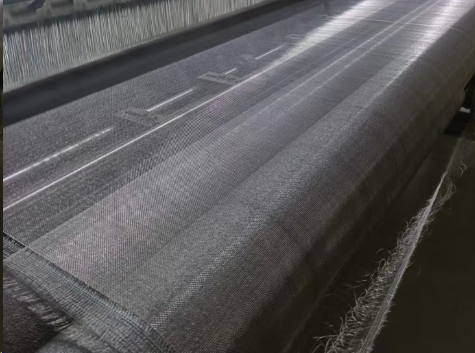
All four alloys belong to the aluminum-magnesium (Al-Mg) 5000 series, known for excellent corrosion resistance and non-heat-treatable strengthening mechanisms.
· Good resistance to seawater and chloride environments
· Medium to high strength depending on magnesium content
· Excellent weldability (varies by grade)
· Suitable for marine and industrial environments
· Moderate magnesium content
· Stabilized corrosion resistance structure
· Excellent corrosion resistance in salt environments
· Good formability and flexibility
· Stable long-term performance
· Easy to weave into fine mesh structures
· Resistant to pitting corrosion in marine air
· Reliable under continuous exposure to humidity and salt spray
· Coastal filtration systems
· Marine protective mesh
· Architectural screening
· General corrosion-resistant applications
5052 is the most balanced and widely used option when corrosion resistance is the primary requirement.
· Higher magnesium content than 5052
· Increased hardness and tensile strength
· Very high strength-to-weight ratio
· Strong resistance to mechanical deformation
· Good corrosion resistance (slightly lower than 5052 in extreme chloride exposure)
· Stronger mesh structure under tension
· Better resistance to mechanical stress and vibration
· Slightly more difficult to form into fine mesh
· Heavy-duty marine fencing
· Industrial protective barriers
· High-load screening systems
5056 is preferred when mechanical strength is more critical than maximum corrosion resistance.
· Higher magnesium content than 5052
· Designed for improved structural strength
· High tensile strength
· Good corrosion resistance in marine environments
· Enhanced rigidity compared to 5052
· Stable structural integrity in mesh form
· Suitable for load-bearing or reinforcement applications
· Slightly reduced corrosion tolerance compared to 5052 in extreme chloride zones
· Reinforcement mesh systems
· Industrial separation structures
· Marine structural support components
5154 is a strength-oriented marine alloy with acceptable corrosion resistance, suitable for hybrid structural applications.
· High magnesium content
· Commonly used as welding filler alloy in marine aluminum systems
· High strength in welded applications
· Good corrosion resistance in controlled environments
· Strong weld compatibility
· Excellent performance in welded mesh structures
· Higher stiffness after forming
· Not always ideal for fine woven mesh due to rigidity
· Welded marine mesh panels
· Structural repair systems
· Industrial welded reinforcement grids
5356 is best suited for welded or structural mesh systems rather than fine woven mesh applications.
Alloy | Corrosion Resistance | Strength | Formability | Best Application Type |
5052 | Excellent | Medium | Excellent | General marine mesh |
5056 | Very good | Very high | Moderate | Heavy-duty mesh |
5154 | Very good | High | Moderate | Structural mesh |
5356 | Good–Very good | High | Low–Moderate | Welded mesh systems |
· 5052: Best long-term stability
· 5056: Strong but slightly more stress-sensitive corrosion risk
· 5154: Balanced performance for structural use
· 5356: Suitable mainly in welded protected systems
· 5052: Preferred choice
· 5056: Acceptable with structural advantage
· 5154: Suitable with design considerations
· 5356: Limited use unless welded and protected
· Easy weaving and forming
· High production efficiency
· Requires stronger forming force
· Slightly lower mesh flexibility
· Stable but more rigid during processing
· Suitable for medium-heavy mesh structures
· Best for welding applications
· Less suitable for fine woven mesh production
· Cost-efficient
· Long service life in marine environments
· Low maintenance requirement
· Higher material cost
· Longer life under mechanical stress
· Balanced cost-performance ratio
· Suitable for structural projects
· Cost varies depending on welding application
· Best value in welded assemblies
· Selecting high-strength alloys for corrosion-critical environments
· Using welding-grade alloys for woven mesh applications
· Ignoring long-term chloride exposure conditions
· Focusing only on strength while neglecting formability
· Mixing alloy grades within the same mesh system
· Coastal / marine / industrial / structural
· Corrosion resistance
· Mechanical strength
· Weldability
· Corrosion priority → 5052
· Strength priority → 5056 or 5154
· Welded structure → 5356
Selecting the right aluminum alloy wire mesh requires a clear understanding of environmental conditions and performance priorities. While all four alloys—5052, 5056, 5154, and 5356—belong to the marine-grade aluminum family, they serve distinct engineering purposes.
· 5052 offers the best balance for corrosion-heavy environments
· 5056 delivers superior mechanical strength
· 5154 provides structural stability with marine suitability
· 5356 is optimized for welded applications
For buyers, the optimal choice depends on whether the priority is corrosion resistance, structural strength, or fabrication method.
For industrial and marine-grade aluminum mesh solutions requiring consistent quality and engineered performance, Jiushen provides aluminum wire mesh products designed for demanding environments and long-term operational reliability. Contact us right now!
Copyright © Hebei Jiushen Wire Weaving Co., Ltd. All Rights Reserved. |
Sitemap
| Technical Support: